Home › Topics › Mathematics & Theoretical CS
Probability & game theory: videos Hacker News recommends
Probability and decision theory: combinatorics, Statistics 110, Bayes theorem, paradoxes, game theory, prisoner's dilemma, Nash equilibrium, randomness, expected value. Below: every video in this topic that at least three HN users linked with real commentary, in at least three different months (33 explainers, 7 talks, 5 lectures), best-scored first, with the comments on each video page.
- 9 HN recommenders 9 months 2020–2024Linked in threads about meritocracy, careers and startups as a reminder that luck shapes who ends up on top.
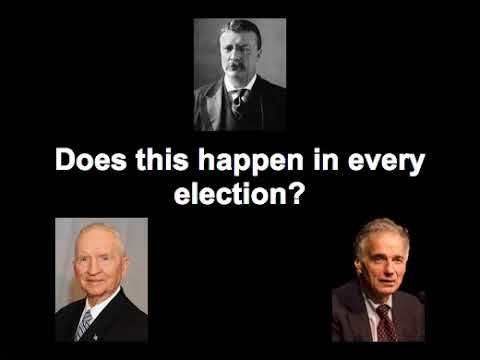
- 10 HN recommenders 10 months 2015–2025HN's go-to explainer for why FPTP leads to a two-party system, linked in countless voting-reform and US politics threads.
- 10 HN recommenders 8 months 2023–2026HN commenters reach for it constantly as an approachable explanation of why cooperation and reciprocity are rational strategies.
- 7 HN recommenders 7 months 2012–2021HN's go-to link whenever ranked-choice voting or voting reform comes up, because it explains the mechanics quickly and entertainingly.
- 5 HN recommenders 5 months 2012–2025S spinout3 · videoThe canonical real-world example in game theory discussions of manipulating a prisoner's dilemma.
- 5 HN recommenders 5 months 2021–2025HN recommends it as an engaging lesson in probability and in how statistics can expose cheating.
- 3 HN recommenders 4 months 2018–2022U Unify The Vote · explainerHN commenters cite it in voting-reform threads as a visual argument that cardinal systems (STAR, approval) beat plurality and ranked-choice voting.
- 4 HN recommenders 4 months 2020–2025HN's go-to link whenever Bayesian reasoning, base rates or imperfect tests come up.
- 3 HN recommenders 4 months 2019–2026HN points to it as a reasoned rebuttal to the claim that AI risk is just Pascal's wager.
- 5 HN recommenders 4 months 2014–2023T The Center for Election Science · explainerThe standard link in ranked-choice voting threads to show IRV does not eliminate the spoiler effect.
- 3 HN recommenders 3 months 2016–2021Recommended in game-theory and cooperation threads, with the whole lecture series endorsed.
- 3 HN recommenders 3 months 2015–2025HN people use it as a clear, quick explanation of Nash equilibrium and why competitors cluster.
- 4 HN recommenders 4 months 2019–2022Recommended as an accessible demonstration that people are bad at producing or judging random sequences.
- 3 HN recommenders 3 months 2015–2025HN recommends it as an excellent programmer-friendly explanation of p-values and statistical thinking.
- 3 HN recommenders 3 months 2013–2017S ScepticaTV · documentaryHN cites it as the classic demonstration of survivorship and confirmation bias in betting, trading and prediction claims.
- 3 HN recommenders 3 months 2017–2021J Julia Galef · talkHN recommends it as a short, accessible intro to Bayesian reasoning and priors.
- 3 HN recommenders 3 months 2017–2026N National Museum of Mathematics · lectureHN recommends it as an entertaining way to learn math through juggling.
- 3 HN recommenders 3 months 2017–2018Recommended on Ask HN threads as a high-quality free probability course for relearning math or building an ML foundation.
- 3 HN recommenders 3 months 2022–2025O Owen Maitzen · explainerHN recommends it as an accessible, well-visualized entry point to Hackenbush, surreal numbers and their link to Nim.
- 2 HN recommenders 3 months 2014–2019HN points to it as the best talk on how people misunderstand probabilities and how designers handle that.
- 3 HN recommenders 3 months 2021P Primer · explainerHN recommends it as part of Primer's strong series of evolution and emergence simulations.
- 2 HN recommenders 3 months 2019–2024HN commenters point to it as a well-argued rebuttal of Dark Forest axioms, and recommend his wider Fermi Paradox series.
- 3 HN recommenders 3 months 2015–2020Linked in electoral-system discussions as a quick, clear argument against the electoral college.
- 3 HN recommenders 3 months 2015–2026HN points to it as a good, anecdote-filled introduction to the math of shuffling from the expert himself.
- 2 HN recommenders 2 months 2022–2024HN people recommend it as the most intuitive introduction to Bayes' theorem and cite it in base-rate arguments.
- 2 HN recommenders 2 months 2017–2021HN points to it for an accessible explanation of why wealth and creative output are so unevenly distributed.
- 2 HN recommenders 2 months 2013–2022C Cambridge University · explainerRecommended as a short, fun introduction to micromorts and thinking about risk.
- 2 HN recommenders 2 months 2024–2026HN cites it in LLM randomness and number-picking threads as evidence that humans are also biased and predictable when asked for random numbers.
- 2 HN recommenders 2 months 2019–2024HN people link it as a short, funny and accurate explanation of why over-testing and over-screening can do harm.
- 2 HN recommenders 2 months 2017–2021N N N Taleb's Probability Questions · commentaryHN cites it when arguing that different risks follow different distributions and should be judged by growth rates and tails rather than current counts.
- 2 HN recommenders 2 months 2016–2024Cited for its well-known attempt to convey the size of 52 factorial.
- 2 HN recommenders 2 months 2017–2024HN points to it as an accessible introduction to Bayesian reasoning and as inspiration for personal projects.
- 2 HN recommenders 2 months 2019–2021C CraftHub Events · talkHN cites it in algorithmic-bias threads for the impossibility result that an algorithm cannot be procedurally fair, group fair and maximally useful at once.
- 3 HN recommenders 2 months 2017–2019U Undefined Behavior · explainerHN commenters link it in voting-reform discussions as a concise explanation of range voting versus other systems.
- 2 HN recommenders 2 months 2017–2024L London Mathematical Society · lectureUsed to illustrate that humans pattern-match and find spurious patterns in enough data points.
- 2 HN recommenders 2 months 2020–2026P Primer · explainerHN commenters link it to explain why plurality voting produces two-party systems and how ranked-choice voting suffers spoiler effects.
- 1 HN recommenders 1 months 2021–2026Mentioned whenever the optimal stopping or secretary problem comes up in relation to choosing a partner.
- 1 HN recommenders 1 months 2017–2024The go-to short explanation whenever lava lamps, entropy sources, or Cloudflare randomness come up.
- 1 HN recommenders 1 months 2021–2023Used as a friendly example of high-dimensional geometry showing up in a simple problem, and of ball volume shrinking inside a hypercube.
- 1 HN recommenders 1 months 2016–2023HN links it as a fun explanation of the purely mechanical Dr. Nim game in threads about early game computers and marble-based binary math.
- 1 HN recommenders 1 months 2023–2025H Hypermind · explainerHN people cite it as a short explanation of how aggregated individual guesses approach the truth.
- 1 HN recommenders 1 months 2025HN recommends it as an excellent, detailed history of Markov chains, often in threads on Markov models and language models.
- 1 HN recommenders 1 months 2019–2025It is the standard reference for why rand() is broken in C++ and what to use instead.
- 1 HN recommenders 1 months 2013–2023HN mentions it mostly in passing as a Taleb talk on market volatility and predicting crises.
- 1 HN recommenders 1 months 2013–2016T timb6 · explainerUsed as a quick, convincing demonstration of crowd estimation when discussing aggregated judgment.
- 1 HN recommenders 1 months 2022–2024Cited in threads on random sampling as a clear illustration of how reasonable-sounding random choices can give biased results.
- cited 3× 0 months 2015–2020HN uses it as the reference for counting how many songs or melodies are possible from a finite set of notes.
- cited 6× 0 months 2024–2026Linked when someone needs a quick accessible source for the claim that every voting method has flaws.
- cited 6× 0 months 2022–2025Mostly used as a joke or parody reference, and occasionally as the canonical illustration of leveled, second-order thinking.
- cited 3× 0 months 2015–2022S singingbanana · demoUsed as a reference for the perseverance behind improbable streaks and selective reporting of best runs.
- cited 4× 0 months 2021–2026HN commenters cite it as the accessible summary of the Dark Forest theory whenever SETI, alien contact, or hostile-environment analogies come up.







Questions
What is the most recommended probability & game theory video on Hacker News?
Why Being Delusional is a Superpower by Veritasium: Linked in threads about meritocracy, careers and startups as a reminder that luck shapes who ends up on top.
How is this probability & game theory list ranked?
By HackerTube's score: the number of distinct months in which an HN comment recommended the video, plus half a point for every month with a strong recommendation. One viral thread counts less than steady recommendations over years.
Where do the videos come from?
From every Hacker News comment between 2007 and 2026 that linked a YouTube video, labeled by an AI model as a recommendation, a citation, a joke or a criticism. The list is published by HackerTube under ODC-By 1.0; this edition adds indexable pages and the comment context.
Video list and Hacker News comment labels from HackerTube (prompted by @karpathy), released under ODC-By 1.0, built on the open-index/hacker-news archive. Hacker News data is provided by Y Combinator; comments remain the work of their authors. Video titles, channel names and thumbnails belong to their creators and are shown via YouTube. HackerTube Watch is an unofficial edition. Data export of 2026-10-31.