4 HN users recommended this talk4 months2020–2025score 4
Years with an HN recommendation, 2007–2026
HN points to it as an entertaining and informative explanation of the economics of reshipping and stolen-card resale scams.
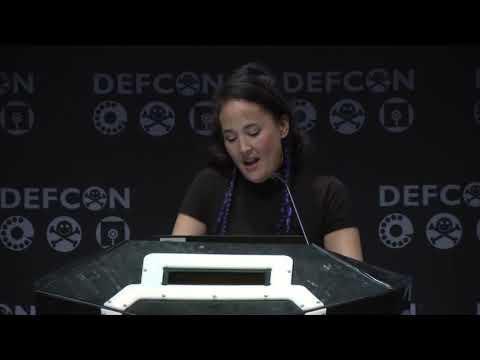
At DEF CON 27, Nina Kollars tells how buying Nespresso capsules on eBay led her to investigate fraudsters reselling goods bought with stolen credit cards. She describes her non-technical tracking and reporting efforts.
“here's an excellent defcon talk on what these some groups do” (HN, 2023)
Here's a tangentially related def con about the strange economics of that whole scam. Basically, everyone in the chain apart from the cardholder benefits. [this video]
DEF CON talk on economics of stolen-card resale scams
Nina Kollars had a nice related talk during Defcon on a similar scam buying what she thought was gray market Nespresso pods whose "seller" bought for her using a stolen credit card. They also gave her a free Nespresso machine, presumably to give her motive to keep quiet. [this video]
Nespresso resale scam using stolen credit cards, experienced firsthand
In addition to the other commenters, here's an excellent defcon talk on what these some groups do: Nina Kollars - Confessions of an Nespresso Money Mule - DEF CON 27 Conference [this video] Essentially, they wait for a buyer of a product to come along to a listing and order it - they'll then buy it using stolen credentials, have it drop-shipped or reshipped to the end user. Everyone but the person with the original card comes out ahead, which is then pushed to all of us via higher fees if they notice and report the fraud.
How reshipping scams use stolen credentials and who profits
Nina Kollars gave an interesting talk on scammers selling coffee through eBay using stolen credit cards. Signature way of knowing is they're shipped direct from nespresso and the purchase price is 40-50% cheaper than retail. I ordered some keurig pods and experienced the same direct shipping and cheap prices. [this video]
You may be a money mule! And you may want to report this, someone vulnerable could be racking up massive debt paying for free stuff. see : [this video]
ID could be faked or stolen credit cards can be used. In fact, dropshipping(ordering items on the fly, automatically, from a backend webstore - e.g. Amazon, Aliexpress, taobao) on stolen credit cards, or even pretending to do that without shipping part, is so prevalent there's a DEF CON talk[1] on that topic. 1: [this video]
3P mule accounts have been a thing on eBay for years and eBay has been very much aware of it since at least 2015 when Brian Krebs wrote about it. [link] See also Confessions of a Nespresso Money Mule by Nina Kollars. [this video] In 2020, I personally reported 150+ hijacked eBay accounts used to commit $160k+ in triangulation fraud against a company I worked for at the time - eBay did very little to help. In February 2022, I collected about 80 reports from people who received 1099-Ks from eBay even though they had never knowingly created an account on the site - their PII (names, addresses, and in some cases even correct SSNs) were used to create fraudulent accounts that sold tens of thousands of dollars each with no vetting or verification of any kind by eBay. And all of that is a tiny drop in the bucket. I place a lot of the blame for where we are, and why this legislation ever came to be, squarely on the marketplaces. They've known about rampant fraud and scams for years, could have put in stricter vetting and verification procedures, invested more in highly trained human powered Trust & Safety to deal with counterfeits and fraud etc. but for the most part they have done the minimum required to cover their own "assets" and nothing more...which still left room for a lot of consumer harm to be done. While I don't think this will curb all of the fraud, like you said they will likely just jump to new accounts, having to produce actual documents to match the stolen PII may at least
Video list and Hacker News comment labels from HackerTube (prompted by @karpathy), released under ODC-By 1.0, built on the open-index/hacker-news archive. Hacker News data is provided by Y Combinator; comments remain the work of their authors. Video titles, channel names and thumbnails belong to their creators and are shown via YouTube. HackerTube Watch is an unofficial edition. Data export of 2026-10-31.
 Plays via YouTube's privacy-enhanced embed
7 Hacker News comments
From the HN archive; up to 20 kept per video, favoring different commenters. Recommendations first.
Citations, criticism and jokes
Read more