Cited on HN 4 times, 2013, never outright recommendedscore 0
Years with an HN recommendation, 2007–2026
HN commenters cite it as an example of claims that government can access digital communications and that none is secure.
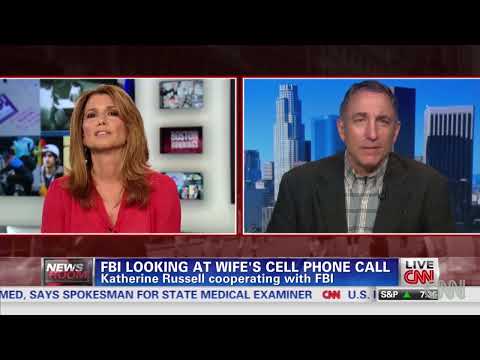
A short CNN news segment reporting that the FBI is looking at a phone call between Tamerlan Tsarnaev's widow and her husband after his photos were released. It is brief 2013 coverage of the Boston bombing investigation.
I remember during the Boston bombing investigation, Tim Clemente, a former FBI counter-terrorism agent, told Erin Burnett on CNN that they could go back and get access to the content of the calls between the deceased bomber and his wife, Katherine Russell. After some Googling, I found a partial transcript of the CNN interview... "Almost immediately Erin Burnett, the host of CNN's Outfront, wanted to know how the government knew. Aren't phone calls supposed to be private? She interviewed Tim Clemente, a former FBI counter-terrorism agent on May 1, asking:" Is there any way … they [the federal investigators] can try to get the phone companies to give that up … It’s not a voice mail. It's just a conversation. There’s no way they can actually find out what [was said on the call], right, unless she tells them? Clemente: There is a way. We certainly have ways in national security investigations to find out exactly what was said in that conversation. It's not necessarily something that the FBI is going to want to present in court, but it may help lead the investigation … we certainly can find that out. Burnett: So they can actually get that? … that is incredible. Clemente: Welcome to America. All of that stuff is being captured as we speak, whether we know it or like it, or not. Source: [link] When I initially saw this on CNN, my first thought was, do they also have access to all photos and videos that are taken and transmitted online? And if so, couldn't they stitch together a mult
I agree with your first two points and if the complexity of using pgp were reduced to that of simply using email then I think it'd become more widely used. I didn't mean to imply that cryptocat itself is a reasonable compromise (I don't know enough), but that a centralized system that implements encryption for its users might be which leads into your fourth point. Yes javascript client-side encryption is fundamentally flawed in its current form from targeted attacks, but I'm thinking of untargeted and immediate wide spread adoption. If you're collecting everything from everyone in perpetuity the risk for abuse I see is when someone becomes interesting to the government they can query their data set and use it against them. I'd think there would be a way to use client side encryption by these companies to protect a user's data until they become 'interesting' at which point they'd have to use more fundamentally secure methods (which is how it currently is anyway). Seems like the easiest way to get the most people generally protected from abuse. Is using https enough? If that's the case then it seems like most communication would be protected anyway. I got the impression that this wasn't true - not because I don't trust google, but because of something else (it seemed google genuinely didn't give access to everything yet people made comments about no digital communication being secure: [this video] ).
Cited as example of claims that no digital communication is secure.
Reposting this from a previous thread ( [link] )... I remember during the Boston bombing investigation, Tim Clemente, a former FBI counter-terrorism agent, told Erin Burnett on CNN that they could go back and get access to the content of the calls between the deceased bomber and his wife, Katherine Russell. After some Googling, I found a partial transcript of the CNN interview... "Almost immediately Erin Burnett, the host of CNN's Outfront, wanted to know how the government knew. Aren't phone calls supposed to be private? She interviewed Tim Clemente, a former FBI counter-terrorism agent on May 1, asking:" Is there any way … they [the federal investigators] can try to get the phone companies to give that up … It’s not a voice mail. It's just a conversation. There’s no way they can actually find out what [was said on the call], right, unless she tells them? Clemente: There is a way. We certainly have ways in national security investigations to find out exactly what was said in that conversation. It's not necessarily something that the FBI is going to want to present in court, but it may help lead the investigation … we certainly can find that out. Burnett: So they can actually get that? … that is incredible. Clemente: Welcome to America. All of that stuff is being captured as we speak, whether we know it or like it, or not. Source: [link] CNN Interview Clip ( [link] ) CNN Follow-Up Interview ( [this video] ) When I initially saw this on CNN, my first thought was, do they also have
CNN follow-up interview on government capturing communications.
Video list and Hacker News comment labels from HackerTube (prompted by @karpathy), released under ODC-By 1.0, built on the open-index/hacker-news archive. Hacker News data is provided by Y Combinator; comments remain the work of their authors. Video titles, channel names and thumbnails belong to their creators and are shown via YouTube. HackerTube Watch is an unofficial edition. Data export of 2026-10-31.
 Plays via YouTube's privacy-enhanced embed
4 Hacker News comments
From the HN archive; up to 20 kept per video, favoring different commenters. Recommendations first.
Read more
Read more
Read more